Endowed professorship for climate law and society appointed
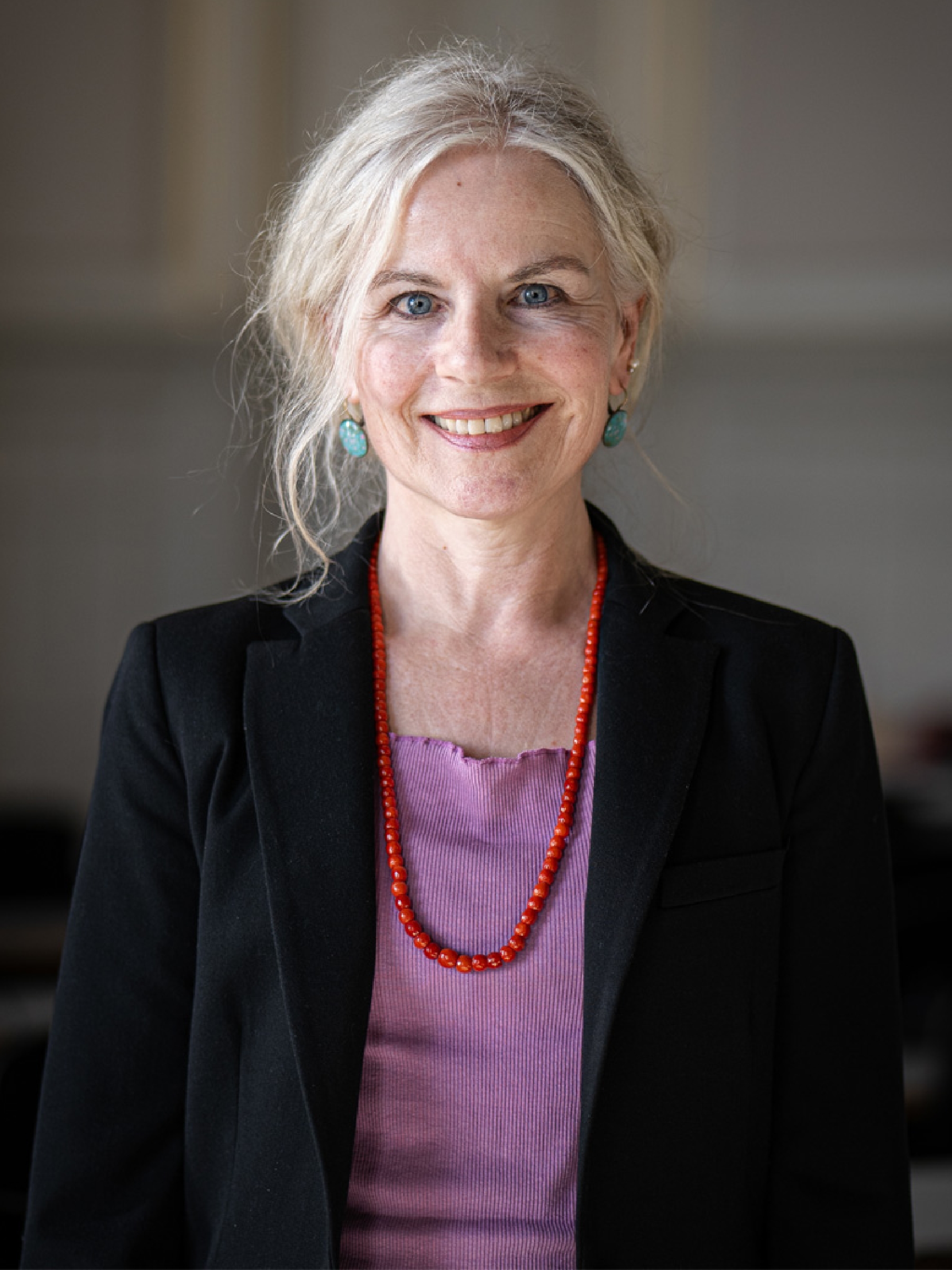
The Executive Board of the University of Bern has appointed Dr. Laura Mai to the endowed professorship for climate law and society. The endowed professorship was established in 2025 with the support of the Bloom Foundation and is intended to help promote legal innovations and develop new approaches to effectively combat climate change. Laura Mai will assume her position on August 1, 2026.
Legal systems shape how we live together and the processes within society at both the national and international levels. Climate law is playing an increasingly important role in this context. However, there is still a lack of legal expertise needed to establish the legal framework for reliable and equitable solutions to address climate change. To close this gap, the University of Bern, in collaboration with the Bloom Foundation, established the endowed professorship for climate law and society in 2025. The endowed professorship aims to build expertise in climate law – both in Switzerland and in an international context. The knowledge developed through this new professorship will be relevant to legislation in the coming years and will serve as legal expertise for court proceedings.
Following a competitive international selection process, a committee at the University of Bern has now appointed Dr. Laura Mai to the endowed professorship. Mai earned her Ph.D. in 2022 from King’s College London. From 2022 to 2025, she conducted research at Tilburg University in the Netherlands. She is currently a Senior Researcher at the Amsterdam Centre for International Law at the University of Amsterdam. Outside of academia, Laura Mai has worked at private law firms in London, Brussels, and Hong Kong, as well as a consultant for the UN Climate Secretariat in Bonn.
“A holistic perspective on climate law”
Laura Mai’s research focuses on the social conditions and the effects of legal requirements. “I am not only interested in which new climate laws are enacted and what they stipulate. It is also important how law is created and applied in practice,” she says. “That is why I am incredibly excited to establish a research and teaching focus at the University of Bern that approaches climate law from a holistic perspective and connects legal and social science research.”
At the societal level, the knowledge generated by the endowed professorship should inform discussions and decision-making processes. “This can happen, for example, through legislation or in the work of associations and NGOs. It can also take the form of research collaborations or participation in panels and events,” explains Mai.
The new professor of climate law and society will take up her position on August 1, 2026. From September through December 2026, she will be visiting New York University’s School of Law as part of a Hauser Global Fellowship. After returning from New York, she will begin her work at the University of Bern: Among other things, Mai will establish an interdisciplinary master’s program at the intersection of climate science, social sciences, and law, and will participate in the new National Center of Competence in Research (NCCR) Clim+. Mai will also lead the project “Legal Geographies of Climate Change.” In this project, she investigates where the law locates the causes and effects of climate change, and what questions regarding responsibility and climate justice can be derived from this. “That may sound abstract, but it is central to practice: the law cannot assign responsibility or compensate for damage unless it is first clarified where exactly the damage and responsibility are legally situated,” says Mai. The multi-year project is funded by the Dutch Research Council (NWO).
Practical Approach
The new professorship will be based at the Institute of Public Law within the Faculty of Law at the University of Bern and affiliated with the Oeschger Centre for Climate Change Research (OCCR). Judith Wyttenbach, Vice Dean of the Faculty of Law and Professor at the Institute of Public Law, is delighted with Mai’s appointment. According to Wyttenbach, Laura Mai brings outstanding professional qualifications and proven expertise in the field of climate law. In addition, she has a strong interest in interdisciplinary research and teaching, which is very important for the subject area: “As a comprehensive university, the University of Bern offers ideal conditions for interdisciplinary exchange, and interdisciplinary collaboration is actively promoted in Bern. With her research at the intersection of law and society, Mai will complement the diverse and innovative climate research at the University of Bern in an increasingly important field.” Thomas Stocker, former president of the Oeschger Centre for Climate Change Research (OCCR) and a driving force behind the endowed professorship, emphasizes the new challenges that anthropogenic climate change poses to society. “Our societies are based on agreed legal foundations, which must be thought through with foresight in a time of such rapid change and expanded accordingly,” he explains. This is the central task of the endowed professorship for climate law and society.
The Bloom Foundation is supporting the establishment of the endowed professorship for a period of ten years. Founded in 2024, the foundation aims to promote forward-looking approaches for a healthy, biodiverse, and regenerative world. “In our view, the further development of climate law is a key lever for advancing climate protection,” explains Ines Najorka, President of the Bloom Foundation. Mai impressed her in particular with her practical understanding of climate law and its societal roots, as well as with her nuanced perspective on how law can be effectively shaped and applied in complex contexts. “We are convinced that she brings the ideal qualifications to further develop this field in collaboration with relevant stakeholders at the national and international levels – and we are also delighted that our foundation will gain valuable insights from this work.”
Oeschger Centre for Climate Change ResearchThe Oeschger Centre for Climate Change Research (OCCR) is one of the strategic centers of the University of Bern. It brings together researchers from 14 institutes and four faculties. The OCCR conducts interdisciplinary research at the cutting edge of climate science. The Oeschger Centre was founded in 2007 and bears the name of Hans Oeschger (1927-1998), a pioneer of modern climate research. More information: oeschger.unibe.ch |
Institute of Public LawThe Institute of Public Law covers the entire field of public law through its teaching, research, and service activities. Its areas of focus include fundamental and human rights, constitutional law, general and special administrative law, public procedural law, and international law. More information: oefre.unibe.ch |
27.05.2026